
A recent study by scientists indicates that the Hindu Kush-Himalaya region is experiencing increased frequency and intensity of extreme weather events due to climate change, including rapid glacial melting and changing rainfall patterns. However, the research also cautions against solely blaming climate change, highlighting that human factors like population growth, commercial activities, and non-enforcement of regulations contribute significantly to the vulnerability and impact of these disasters. The study points out that many devastating floods originate from small glaciers and rain-fed streams, exacerbated by encroachment on unstable slopes and floodplains.

A new study projects that by the end of the century, hot days could experience an additional four hours of extreme heat, with low and middle-income countries being disproportionately affected. The research highlights that traditional daily temperature metrics often overlook shorter, intense periods of heat, and hourly assessments are crucial for effective heat risk management and public health planning in a warming climate.

BIT Mesra has launched 'HimClimX', an AI-powered platform designed for Himalayan climate intelligence and visualisation. It integrates over a century of climate data to offer trend analysis, anomaly detection, spatial visualisation, impact assessment, and AI-driven forecasting for the Himalayan region.

Researchers at IIT Madras have discovered that rare 'specialist' marine microorganisms play a crucial and previously underestimated role in maintaining the stability of ocean ecosystems. Their global analysis of bacterial communities, published in 'mSystems', reveals these microbes act as vital connectors within microbial networks, significantly impacting ecosystem resilience and informing conservation efforts.

Experts at the Mosambi Climate Conference (MC2) emphasized the importance of incorporating digital architecture into the energy ecosystem for achieving significant climate transformation.

'When a glacier collapse or a major flood event does occur, the water will simply reclaim its original path, and anything built in that path will be swept away.'

A new study reveals that extreme climate hazards, typically associated with higher levels of global warming, could occur even under a moderate warming of 2 degrees Celsius, posing significant threats to food production, forests, and urban areas.

'It appears to be a combination: A glacier breaking away, and a dam-like formation downstream reaching capacity and releasing water suddenly.'
Researchers at the University of Cincinnati have discovered that insects, including fruit flies and mosquitoes, respond predictably to humidity cycles, suggesting humidity acts as a 'zeitgeber' or time giver for their biological clocks. This finding has broad implications for understanding circadian rhythms across animal systems, as insects' survival is closely tied to hydration levels.

Chinese officials warn that glaciers on the Tibetan Plateau are becoming increasingly unstable, leading to a higher risk of flash floods and other disasters, as evidenced by a recent deadly ice-rock avalanche near the Nepal-Tibet border. The region has seen a significant reduction in glacier area, and scientists are calling for advanced monitoring systems to predict these complex events.
A new study by IIT Kharagpur researchers, published in Nature Communications, reveals that urban growth patterns significantly influence future cooling demand in cities. The research highlights that a city's "thermal memory," shaped by decades of development decisions, impacts its heat burden and energy requirements, independent of global temperature rises. The study analysed 88 Indian cities and a global sample of 52 cities over two decades.
Researchers have discovered that Delhi's urban forests are significant carbon sinks, storing substantial amounts of carbon in trees and soil, with the potential to generate revenue through carbon credits. The study highlights the importance of preserving and expanding these forests to combat climate change.

Following devastating flash floods in Nepal, experts are calling for systematic scientific assessments of glaciers to understand and mitigate hazards, alongside the development of a robust land use policy for the Himalayan region. The floods, which killed over 460 people and left thousands missing, are believed to be linked to climate change impacts on glaciers and permafrost.

Scientists are examining how a possible glacial collapse and ice-rock avalanche may have triggered the devastating flash floods along Nepal's Bhote Koshi River, with preliminary assessments indicating that debris may have temporarily blocked the Lhende River and created a landslide dam that subsequently gave way.

'ISRO will not manufacture any launch vehicles. That will all be done by the private sector or public sector undertakings.'

Experts from the International Centre for Integrated Mountain Development (ICIMOD) suggest that an ice-rock avalanche originating in a high-altitude area likely triggered the devastating flash floods that swept across central Nepal districts, killing at least 95 people and leaving nearly 500 missing.
The ACSEL Technology Forum, a Karnataka government Centre of Excellence in AI, has launched Tathyakosh.in, a digital public good designed to make India's extensive public data more accessible. This platform consolidates over 1.5 million datasets from 458 sources, addressing the challenge of fragmented data discovery across various government and research portals. It aims to benefit researchers, startups, and technology teams in sectors like healthcare, agriculture, and financial inclusion by providing a structured and discoverable data infrastructure.

'There needs to be a monitoring of glaciers in high altitude areas and one needs to check regularly how geological changes are taking place.' 'We can mitigate that by regular monitoring but unfortunately, hardly any monitoring is happening.' 'And without monitoring those higher altitudes of Himalayas, people are suffering.'

'The valley is around 16 km from the Nepal border, and it took just 8-10 minutes for the ice and rocks to reach the Nepal border. You can imagine how fast it must have travelled!'
Researchers at IIT Indore have developed a groundbreaking method to convert carbon dioxide and glycerol, two common waste materials, into valuable green chemicals like lactic acid and formic acid in just seven minutes. This low-energy process uses a specially designed ruthenium-based catalyst and microwave heating, offering a sustainable solution for waste management and green manufacturing.

India and China are in what experts call 'a cooperation-versus-competition situation'.

Prime Minister Narendra Modi has called upon India's youth to dream big, assuring them of government support and resources, including a Rs 1 lakh crore Innovation Fund, to bolster the country's burgeoning startup ecosystem and drive its journey towards becoming a developed nation.

Upcoming Mahindra Scorpio Lifestyler 2027: Expected Price & Features!

Extreme heat and humidity could emerge as a major challenge at the 2026 FIFA World Cup, with several host cities in the United States, Canada and Mexico expected to experience soaring temperatures during the tournament.

'This is no longer a single-hazard problem; it is a cascading, multi-hazard problem. A landslide never occurs in isolation. This entire chain is the cascading effect of what looks, at first, like a single disaster.'

A parliamentary panel has strongly recommended that the Indian government appoint a dedicated 'polar ambassador' to enhance its strategic engagement and diplomatic influence in the critical Arctic and Antarctic regions, aligning with global trends and India's growing focus on polar affairs.

A new study reveals that India's annual gross primary productivity (GPP) increased significantly from 1985 to 2014 and is projected to continue rising until 2100, even under high-emissions scenarios. This enhancement is attributed to stronger precipitation and carbon dioxide fertilisation effects, with the Indo-Gangetic Plain, Northeastern India, and the Western Ghats expected to see the largest increases.

IIT Ropar's ANNAM.AI, in collaboration with Syngenta and Google, has launched 'HACK CORE 2026', a national AI hackathon. It invites innovators to develop AI-driven solutions for critical agricultural challenges like crop health, pest management, and climate-resilient farming, offering significant prizes and mentorship.

Himachali cuisine is simple and hearty. It's seasonal and robust too, being deeply-rooted in mountain life and shaped by cold climate and slow-cooking traditions.
A new study by The Energy & Climate Initiative Society (ENCIS) predicts that AI adoption in India's power generation sector will surge from 35% to 65% by 2030, becoming a core operational capability. The study highlights that nearly seven out of ten professionals see power generation as offering the best opportunity for efficiency gains through AI, driven by India's expanding digital infrastructure and significant investments from energy giants. Predictive asset management and proactive maintenance are identified as key areas for AI application, with efficiency being the primary driver for AI investments.

China sailed through the crisis in the Strait of Hormuz relatively unscathed even as the impact of its steps shielded other consuming nations from having to pay high crude oil prices.

Karnataka Chief Minister D K Shivakumar announced the establishment of India's first government-driven Artificial Intelligence University and an AI Hub in Bengaluru. This initiative aims to position Karnataka as a global leader in responsible AI innovation, fostering talent, research, and collaboration. The state seeks to become an AI-native state, leveraging AI to improve governance and daily life across various sectors.

Several Indian real estate companies, including BPTP Ltd and Smartworld Developers, are rethinking or shelving their initial public offering (IPO) plans, which were expected to raise around 15,000 crore, due to weaker housing demand, higher costs, and a more cautious investment climate.

'It is not because of the war in West Asia, which began on February 28.' 'Petroleum product prices are already going through the roof. They are bound to have a serious inflationary impact.' 'A country's leadership is tested in trying times. It is here that the current leadership is failing.'


India's hydropower generation has been significantly constrained in July due to the El Nio effect, which has weakened the southwest monsoon and reduced reservoir levels. This decline, following a 21 per cent year-on-year drop in June 2026, is forcing greater reliance on coal generation and straining grid flexibility amidst rising power demand.

The government introduced the SHANTI Act, 2025, to support the mission and open the sector to private participation.

Former NITI Aayog CEO Amitabh Kant warns that artificial intelligence (AI) could exacerbate global inequalities if not used for the benefit of people, highlighting its immense energy requirements and the need for renewable energy solutions.

Football's global players' union has renewed concerns about the potential impact of heat on the 2026 World Cup, following a scientific analysis indicating a high likelihood of dangerous temperatures for both players and fans.
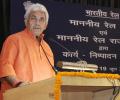
Jammu and Kashmir LG Manoj Sinha addressed the 'IMMUNOCON-2026' conference, stressing the importance of translating scientific immunological knowledge into public health action. He urged scientists to focus on precision medicine, immuno-AI fusion, climate immunity, and accelerating translational research to combat infectious diseases and enhance healthcare delivery.
